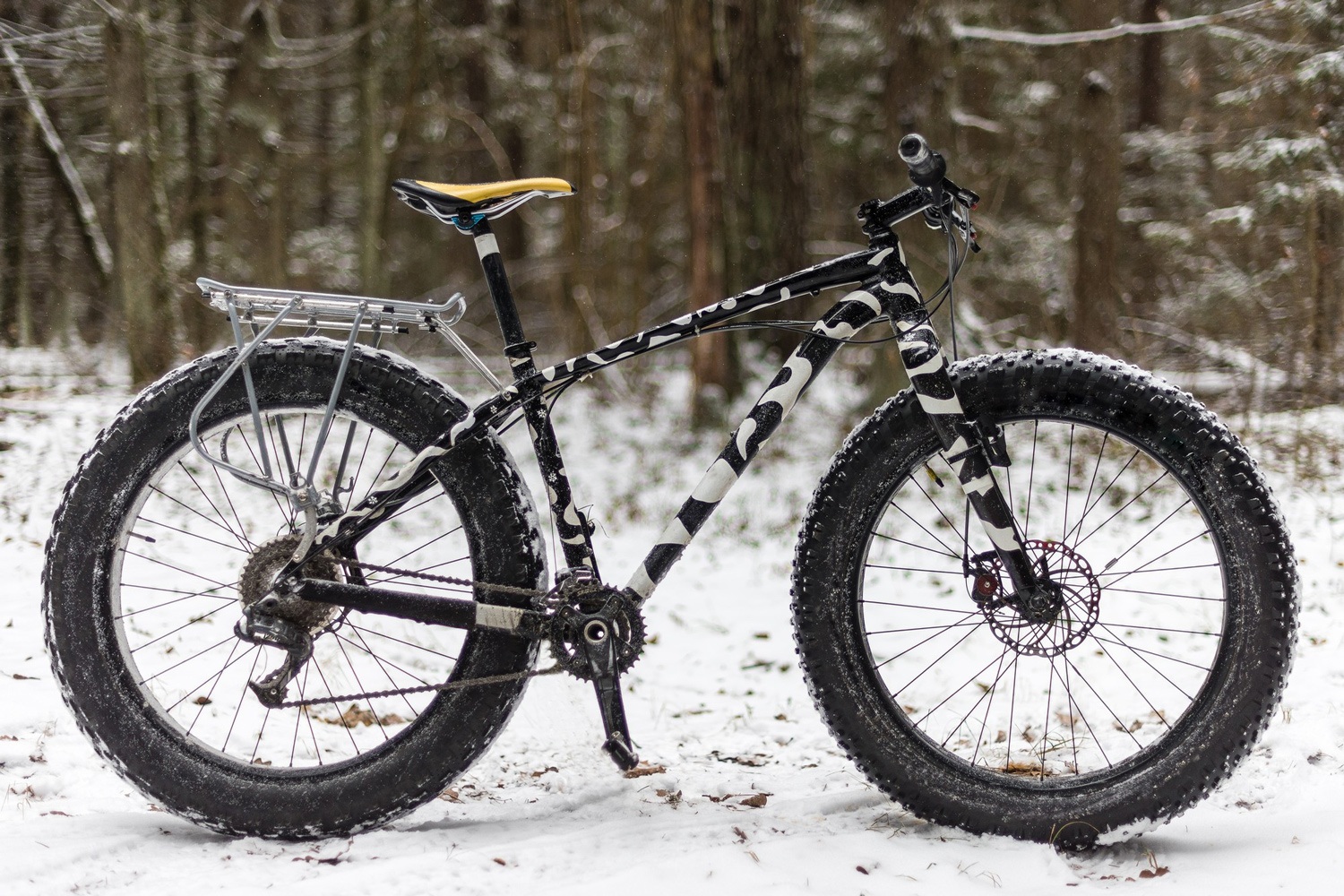
For a 200 lb rider on 4.0 in tubeless fats tires, begin at about 6 psi entrance and seven psi rear on groomed snow, 5 and 5.5 psi in recent snow, 8 and 9 psi on dust, and 9.5 and 10.5 psi on pavement. Lighter riders go decrease and heavier riders go larger; the chart beneath scales every floor by weight. Keep contained in the vary printed in your tire’s sidewall and your rim’s restrict (Surly lists 5 to fifteen psi for 3.7 to 4.8 in fats tires), and set the strain outdoors, as a result of a tire set to six psi in a 68°F home reads about 3.3 psi at 0°F.
Icebike began in 1996 as a mailing record of riders who refused to park their bikes for the winter, and the location grew out of that record. Winter riders nonetheless argue about fats bike strain, as a result of one or two psi adjustments how a tire floats on snow, and the gauge on a highway ground pump can miss that by a number of psi.
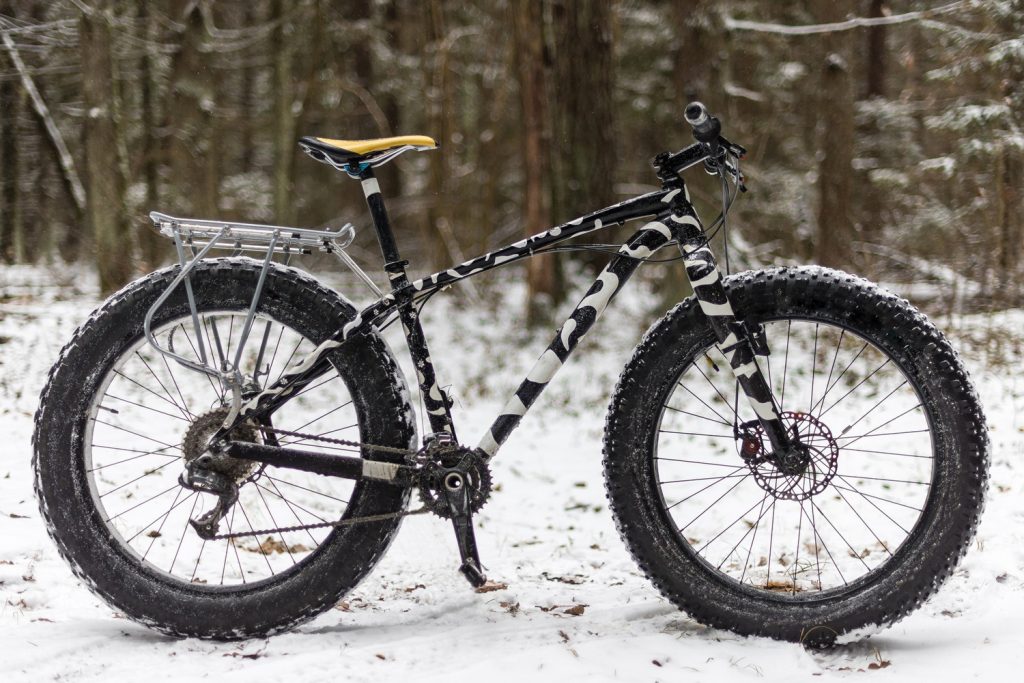
Fats bike tire strain chart by floor and rider weight
Learn throughout out of your floor to your weight. Every cell exhibits entrance / rear psi for a 4.0 in tubeless tire, from the Icebike mannequin defined beneath the desk. Deal with each quantity as a place to begin: experience a check loop, then alter in 0.5 psi steps.
Floor
150 lb rider (entrance / rear)
200 lb rider (entrance / rear)
250 lb rider (entrance / rear)
Change it when
Groomed or packed snow
5* / 5.5
6 / 7
7 / 8
Let air out in the event you go away a rut or the bike wanders
Contemporary or unfastened snow
5 / 5*
5* / 5.5
6 / 7
Let air out in the event you sink, however solely to your sidewall minimal
Ice, studded tires
5 / 6
6.5 / 7.5
8 / 9
Don’t go beneath the sidewall minimal chasing grip
Tender, dry sand
5 / 5*
5* / 5.5
6 / 7
Let air out if the entrance wheel plows and stalls
Moist, agency sand
5* / 5.5
6 / 7
7 / 8
Let air out if the tire breaks by means of the crust
Filth path
6 / 7
8 / 9
9.5 / 10.5
Add air if the rim hits rocks; let air out if the tire bounces
Pavement (dry)
7.5 / 8.5
9.5 / 10.5
11.5 / 13
Add 1 to 2 psi if the bike feels sluggish, as much as your limits
*Starred cells are held at 5 psi; the mannequin offers 3.8 to 4.9 psi there. 5 psi is the bottom minimal Surly and Schwalbe publish for 4 to five in tires.
How we constructed it (Icebike math, not a maker chart). The snow and ice rows come from the components behind Icebike’s winter tire strain calculator, utilizing rider weight plus 35 lb for the bike and winter gear. The dust and pavement rows use the fats bike setting of Icebike’s bike tire strain calculator. No tire maker publishes a sand quantity, so the sand rows borrow the snow values: dry sand behaves like recent snow, moist sand like a groomed path. As a cross-check, 45NRTH crew rider Danielle Musto begins at 6 psi rear and 5.5 to six psi entrance on hard-packed snow, then drops to five rear and 4 to 4.5 entrance in unfastened snow. That sits near the 200 lb column.
Modify the chart to your setup:
Interior tubes: add about 1 psi. The 2 Icebike calculators increase tubed setups 12 to fifteen% over tubeless to maintain the tube off the rim.
Wider tires: subtract about 1 psi for a 4.5 in tire and about 1.5 psi for a 4.8 in tire (Icebike calculator mannequin at 200 lb), however by no means beneath your sidewall minimal. On the 150 lb column meaning staying at 5 psi on most 4.5 and 4.8 in tires.
Rim width: a large rim (80 mm or extra inside) spreads the casing and helps it higher than a 65 mm rim, so it may tolerate rather less strain. Deal with that as basic steerage, not a quantity; our rim width and tire dimension chart exhibits which tire widths match which rims.
Entrance vs rear: run the entrance 0.5 to 1 psi beneath the rear. The rear carries extra of your weight, and 45NRTH’s crew riders report splits of that dimension.
Racks, baggage or a motor: use your complete loaded weight. Vee Tire’s e-bike steerage says heavier bikes and riders go towards the highest of the printed vary.
What tire makers publish, and the bounds you may’t cross
Your tire’s sidewall and your rim set a window, and each quantity within the chart should fall inside it. Surly’s wheel, rim and tire directions say by no means to go beneath the tire or rim minimal or above both most. In apply, use the upper of the 2 minimums and the decrease of the 2 maximums.
Maker
Tire or rim
Printed strain
What it means
Surly
Fats tires, 3.7 to 4.8 in
5 to fifteen psi
Really helpful working vary. The sidewall most is for seating the bead solely.
Surly
Fattest tires, 6.0 to six.2 in
1 to 10 psi
The one maker spec vary beneath 5 psi we discovered
Schwalbe
Jumbo Jim 26 x 4.80
5 to 30 psi (0.4 to 2.0 bar)
Spec-page minimal and most; 120 kg load ranking
Vee Tire
Snowshoe XL, Snowshoe 2XL, Snow Avalanche
8 to twenty psi (0.6 to 1.4 bar)
Vary listed in Vee’s spec tables. Vee markets the Snowshoe XL for snow and sand dunes.
45NRTH
Dillinger 4, Dillinger 5
One determine per dimension: 20 or 30 psi
A single strain on the spec desk; the directions say to make use of the vary on the sidewall
45NRTH
Levitas rim
30 psi most
Rim restrict, regardless of the tire says
Terrene
Cake Eater, Johnny 5
No vary on the product or tech pages
Learn the sidewall
Makers don’t all the time agree with themselves. Vee’s spec tables record 8 to twenty psi for its snow tires, but its Winter Fats-Biking 101 information tells riders to start out at 4 to six psi on packed trails, drop to 2 to 4 psi in delicate snow and go to 1 to 2 psi when it will get deep. When a weblog and a sidewall disagree, the sidewall is the rated restrict. Under it, you experience outdoors what the maker will stand behind, and Schwalbe warns that too little strain can let the tire come off the rim.
Fats bike tire strain for snow
On groomed or packed snow, most riders land between 5 and eight psi. IMBA Canada’s fats bike steerage says snow using strain “will usually be lower than 10 PSI,” and offers a check you may see: you must journey over the snow with out leaving a rut deeper than one inch. When you minimize a deeper rut on a groomed path, let air out or flip round.
In recent or unfastened snow, drop 1 to 2 psi out of your groomed setting. Musto calls that change large: the decrease strain places extra tire on the floor so that you float as an alternative of sinking. Circumstances change throughout a experience, too. One other 45NRTH rider, Chelsea Strate, let air out earlier than a race begin when heat solar and warm-up visitors turned the course to mush.
Agency snow goes the opposite method. 45NRTH racer April Morgan discovered a cheesy, cement-hard course and ran 9 to 10 psi, and she or he felt quick. At one other race, on a really chilly day with the course in mint situation, she ran 4 to five psi and mentioned it felt like dragging a piano for almost 5 hours.
Skip the low finish in the event you experience rocky trails underneath skinny snow. A tire that folds onto the rim at 5 psi can harm each.
Studded fats tires and ice
On ice, run a studded tire close to the low finish of its printed vary, not far beneath it. Schwalbe’s winter recommendation says that even with studded tires you must keep near the tire’s really helpful minimal strain, as a result of that’s the place the studs grip finest. The chart’s ice row follows the Icebike calculator mannequin, which sits 0.5 to 1 psi above groomed snow and stays contained in the 5 to fifteen psi Surly vary. Use Schwalbe’s rule as the ground: don’t drop beneath the minimal to chase extra grip.
Naked pavement between icy patches: Schwalbe says the next strain cuts operating noise on clear roads. Add air for a highway commute and drop it once more for an icy path.
Stud depend: studded fats tires carry 160 to 280 studs relying on mannequin. Vee’s Snow Avalanche 26 x 4.0 has 280, 45NRTH’s Dillinger 5 26 x 4.6 has 258, and Terrene’s Cake Eater 26 x 4.6 Gentle Studded has 180.
Stud loss: 45NRTH says arduous stops and sharp cornering can rip studs out of their pockets. Test that each stud sits absolutely in its pocket earlier than every experience.
E-bikes: 45NRTH doesn’t suggest its tires on power-assist bikes, as a result of the additional torque and weight put on the casing and pull studs.
Undecided you want studs in any respect? The studded tire selector matches tire sort to your situations, and our information to winter bike tires and studded tires covers stud varieties and tread.
Fats bike tire strain for sand
For delicate, dry sand, begin at your fresh-snow strain: 5 to five.5 psi for a 200 lb rider. On moist, agency sand close to the waterline, use your groomed-snow strain. These are Icebike beginning factors by analogy with snow; not one of the tire makers above publishes a sand quantity, although Vee markets its Snowshoe XL and 2XL for sand dunes.
Hold a pump with you. If a paved highway connects you to the seaside, add air earlier than you experience it, then drop again on the sand.
Fats bike tire strain for pavement and dust trails
On pavement, a fats tire wants extra air than on snow: about 9.5 to 10.5 psi for a 200 lb rider, and 11.5 to 13 psi at 250 lb. Different fats bike guides record 15 to 22 psi for pavement, and several other of them are written for heavier e-bikes. These numbers sit above the 5 to fifteen psi Surly recommends for 3.7 to 4.8 in tires. When you experience solely pavement, you may work up towards the highest of your tire’s printed vary. Schwalbe notes that on the highway, larger strain lowers rolling resistance, and that using on too little air wears the tire early and cracks the sidewall. If the bike nonetheless feels sluggish, add 1 to 2 psi at a time, as much as the decrease of your sidewall and rim maximums. On a Surly tire, cease at 15 psi, the highest of its working vary.
On dust and roots, 8 to 9 psi fits a 200 lb rider. Go larger in the event you really feel the rim hit rocks; go decrease if the tire bounces and loses grip on roots.
Journey an electrical fats bike? Its tires and weight are a unique case. Our e-bike tire strain information covers them.
How chilly adjustments fats bike tire strain
Air strain falls because the air cools, and at fats bike pressures the drop is a big share of what you set. Set a tire to six psi in a 68°F (20°C) home and experience at 0°F (minus 18°C), and it reads about 3.3 psi, a lack of almost half.
Set indoors at 68°F
At 32°F (0°C)
At 14°F (minus 10°C)
At 0°F (minus 18°C)
At minus 20°F (minus 29°C)
5 psi
3.7 psi
3.0 psi
2.5 psi
1.7 psi
6 psi
4.6 psi
3.9 psi
3.3 psi
2.5 psi
8 psi
6.5 psi
5.7 psi
5.1 psi
4.2 psi
10 psi
8.3 psi
7.5 psi
6.8 psi
5.9 psi
15 psi
13.0 psi
12.0 psi
11.2 psi
10.0 psi
Icebike calculation. We used the perfect gasoline legislation at fixed quantity: absolute strain (gauge studying plus 14.7 psi of sea-level air) adjustments consistent with absolute temperature in kelvin. At 6 psi, each 10°F of cooling prices about 0.4 psi. The desk assumes the air inside has reached the out of doors temperature and ignores small adjustments in casing quantity, so learn it as a detailed estimate.
Chelsea Strate realized this at a minus 12°F race begin. She let air out in a resort room close to 80°F, and out of doors her rims hit the bottom. By the identical math, 5 psi set at 80°F falls to about 1.6 psi at minus 12°F.
The repair: let the bike sit outdoors till the tires attain air temperature, then set the strain there. When you should set it indoors, purpose larger. To experience at 6 psi at 0°F, set about 9 psi at 68°F; to experience at 5 psi at 14°F, set about 7 psi.
Why your ground pump gauge can’t learn 5 psi
Most ground pump gauges can’t measure fats bike strain effectively, as a result of 5 psi sits on the backside of a dial constructed for highway tires. On a 0 to 160 psi dial, 5 psi makes use of the primary 3% of the needle’s sweep.
ASME B40.100 is likely one of the most important requirements for mechanical strain gauges, and Ashcroft explains that its Grades A and B enable probably the most error within the decrease and higher quarters of the dial: plus or minus 2% of span for Grade A and three% for Grade B. We discovered no ASME grade revealed for the bike pumps named right here. Our inference: even a 160 psi gauge that met Grade B may learn as much as 4.8 psi excessive or low on the backside of the dial, near a complete snow setting.
Gauge full scale
Allowed error, decrease quarter, Grade A
Allowed error, decrease quarter, Grade B
0 to 160 psi
plus or minus 3.2 psi
plus or minus 4.8 psi
0 to 30 psi
plus or minus 0.6 psi
plus or minus 0.9 psi
0 to fifteen psi
plus or minus 0.3 psi
plus or minus 0.45 psi
Use a gauge constructed for low strain. Vee Tire’s fats bike survival equipment lists a 0 to fifteen psi gauge, and Topeak builds a 30 psi gauge into its JoeBlow Dualie ground pump for fats bike tires. Whichever gauge you belief, use the identical one each time, so a studying of 6 psi means the identical factor subsequent week.
No gauge on the path? 45NRTH’s crew riders squeeze the tires of riders round them at a race begin. If everybody else runs softer, they let just a little air out.
Tubeless vs tubes at low strain
Tubeless enables you to run about 1 psi decrease than a tube (Icebike calculator mannequin), and it removes the tube that may pinch. Vee Tire places the tube downside in a single line: a heavy bike at low psi pinches the tube towards the rim on each influence.
Seating: Surly’s tubeless steps inflate the tire above using strain to seat the bead, then drop it to using strain. Use the sidewall most for seating solely.
Sealant within the chilly: Vee’s equipment record requires a sealant rated for freezing temperatures. Orange Seal sells a Subzero components made for excessive chilly.
Rolling the bead: Schwalbe warns that strain beneath the printed minimal can let the tire come off the rim.
Valves: Strate’s Presta valve corroded on a salty highway, and she or he couldn’t add air. Match valve caps for winter using.
Fats bike tire strain calculator
For a quantity tuned to your actual weight and tire, use the calculator beneath. Choose Fats bike because the tire sort, enter rider plus bike weight in kilos, and enter tire width in millimeters (4.0 in is about 100 mm, 4.5 in about 114 mm, 4.8 in about 122 mm). Its fats bike ground is 5 psi, the identical because the chart: when your weight and tire level decrease, it exhibits 5 psi and says the result’s held on the ground. In case your sidewall minimal is larger than 5 psi, use the sidewall quantity. Its chilly pavement setting assumes winter roads and runs 2 to three psi beneath the chart’s dry pavement row, so use the chart for dry summer season pavement.
The calculator covers chilly pavement, snow and ice. For dry dust and summer season pavement, use the bike tire strain calculator with the fats bike setting.
Guidelines: set fats bike tire strain earlier than a winter experience
Learn your tire’s sidewall vary and your rim’s most. Write down the narrower window.
Depart the bike outdoors till the tires attain air temperature.
Measure with a 0 to fifteen or 0 to 30 psi gauge, not a 160 psi ground pump dial.
Set the rear from the chart, and the entrance 0.5 to 1 psi decrease.
Journey a check loop. On a groomed path, examine that your rut stays underneath one inch.
Modify 0.5 to 1 psi at a time: let air out in the event you sink or spin, add air if the tire folds in corners or the rim hits.
Carry a pump and your gauge, and add air earlier than any paved highway house.
Fats bike tire strain FAQ
What PSI ought to a fats bike tire be?
Between 5 and 15 psi for many 4 to five in fats tires: 5 to eight psi on snow and 6 to 13 psi on dust and pavement, relying on weight. Keep contained in the vary in your sidewall.
Are you able to run a fats bike tire at 2 psi?
Provided that the tire is rated for it. Surly lists 1 to 10 psi for its 6.0 to six.2 in tires, however 5 psi is the revealed minimal for its 3.7 to 4.8 in tires and for Schwalbe’s Jumbo Jim.
Ought to the entrance tire have much less strain than the rear?
Sure, by 0.5 to 1 psi. The rear carries extra of your weight, and 45NRTH’s crew riders run splits of that dimension.
Does chilly climate decrease fats bike tire strain?
Sure. At 6 psi you lose about 0.4 psi for each 10°F of cooling, so set strain outdoors at using temperature.
In search of a motorcycle to run these pressures on? See our picks for the most effective fats tire bikes.
Sources
Surly. Wheel, Rim, and Tire Directions (PDF, 6/24; accessed October 15, 2026). Working ranges: 1 to 10 psi for six.0 to six.2 in tires, 5 to fifteen psi for 3.7 to 4.8 in fats tires; rim and tire minimal and most rule; most strain just for seating.
45NRTH. Guidelines of Fats: Dialing in Tire Strain, by Danielle Musto (accessed October 15, 2026). Staff riders’ pressures for packed and unfastened snow, 9 to 10 psi on a tough course, the minus 12°F race begin, valve corrosion, squeezing different riders’ tires.
45NRTH. Tire Directions (PDF, 2/22; accessed October 15, 2026). Use the strain vary on the sidewall; examine studs earlier than every experience; no power-assist bikes.
45NRTH. Spec tables for Dillinger 5 and Dillinger 4, and the Levitas rim web page (accessed October 15, 2026). PSI figures of 20 or 30 per dimension, 258 studs on the Dillinger 5 26 x 4.6, 30 psi rim most.
45NRTH. Stick It to Winter: A Information to Studded Tires (accessed October 15, 2026). Laborious stops and sharp cornering pull studs.
Vee Tire. Winter Fats-Biking 101 (accessed October 15, 2026). 4 to six, 2 to 4 and 1 to 2 psi options; 0 to fifteen psi gauge and freeze-rated sealant within the equipment record.
Vee Tire. Spec tables for Snow Avalanche, Snowshoe XL and Snowshoe 2XL, and the E-Bike Tires information (accessed October 15, 2026). 8 to twenty psi (0.6 to 1.4 bar), stud counts, Snowshoe XL and 2XL marketed for sand dunes, tube pinching at low strain.
Schwalbe. Jumbo Jim 26 x 4.80 Tremendous Floor (accessed October 15, 2026). 0.4 to 2 bar, 5 to 30 psi, 120 kg load.
Schwalbe. Winter Ideas for protected using (accessed October 15, 2026). Decrease strain provides grip, don’t go beneath the sidewall minimal, studs grip finest close to the really helpful minimal, larger strain cuts noise on clear roads and lowers rolling resistance on the highway.
Terrene. Cake Eater 26 x 4.6 Gentle Studded, Johnny 5 26 x 5.0 Gentle and Tech pages (accessed October 15, 2026). 180 studs; no strain vary revealed.
IMBA Canada. Fats Bike Finest Practices (accessed October 15, 2026). Strain usually underneath 10 psi on snow; no rut deeper than one inch.
Ashcroft. What Are ASME Accuracy Grades for Mechanical Strain Gauges? (February 23, 2026). ASME B40.100 grades as p.c of span, with separate limits for the decrease quarter.
Topeak. JoeBlow Dualie spec web page (accessed October 15, 2026). 30 psi (2 bar) gauge for fats bike tires.
Orange Seal. Subzero Sealant (accessed October 15, 2026). Formulated for excessive chilly.