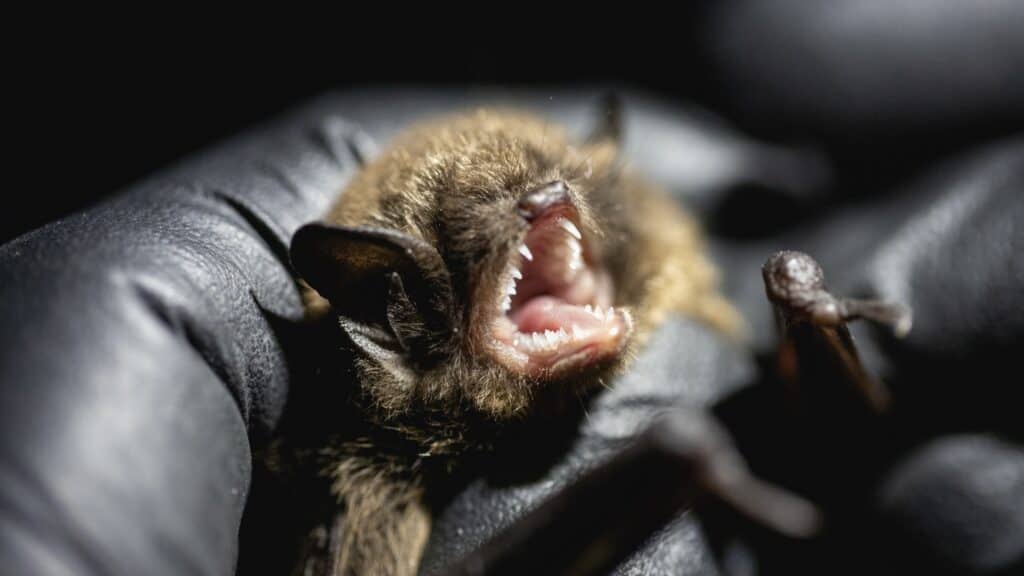
Glacier Nationwide Park has confirmed its first instances of white-nose syndrome in bats, marking a regarding growth for wildlife in Montana. The illness was detected in a deceased little brown bat discovered within the Saint Mary space in Could, whereas subsequent testing confirmed the presence of the fungus answerable for the illness in a number of stay bats on the park’s east aspect.
In line with park officers, these are the primary confirmed detections of each white-nose syndrome and its causative fungus, Pseudogymnoascus destructans, in Glacier Nationwide Park and Glacier County.
A Illness That Has Killed Thousands and thousands of Bats
White-nose syndrome is a fungal illness that impacts hibernating bats. The an infection causes bats to get up throughout hibernation, forcing them to burn by way of important fats reserves when meals is scarce. This will result in dehydration, hunger, and dying.
For the reason that illness was first found in New York in 2006, white-nose syndrome has unfold throughout North America, killing thousands and thousands of bats. It has now been confirmed in 42 U.S. states and 9 Canadian provinces.
The fungus spreads primarily by way of contact between bats and might survive in underground environments for years, probably exposing new populations lengthy after its preliminary arrival.
Glacier Nationwide Park is residence to 10 documented bat species. All of them feed on bugs and function prey for different wildlife, together with raptors and weasels. Important declines in bat populations may due to this fact have penalties for ecosystems contained in the park and surrounding landscapes.
Researchers Testing a Potential Vaccine
Glacier Nationwide Park has monitored bat variety, inhabitants occupancy, and well being since 2011, with assist from conservation organizations and different funding sources.
Park biologists are additionally collaborating in analysis inspecting whether or not a vaccine can shield bats towards white-nose syndrome.
Between 2024 and 2026, researchers captured and processed 529 bats for the examine. Of these, 265 obtained a vaccine, whereas 264 obtained a placebo. Every bat was fitted with a tag so researchers may monitor survival because the animals emerge from hibernation every spring.
By evaluating survival charges between the 2 teams, scientists hope to find out whether or not vaccination may also help shield wild bat populations from the illness. The analysis may present beneficial data as white-nose syndrome continues to unfold into new areas.
How Guests Can Assist Defend Bats
Though white-nose syndrome doesn’t infect people or pets, folks can unintentionally transport the fungus to new places on clothes, footwear, and caving tools.
Glacier Nationwide Park advises guests by no means to deal with or choose up bats. Anybody who visits caves or different bat habitats must also comply with U.S. Fish and Wildlife Service decontamination steerage for cleansing clothes, footwear, and tools.
Classes: MontanaNational Park NewsNational ParksWildlife
Source link