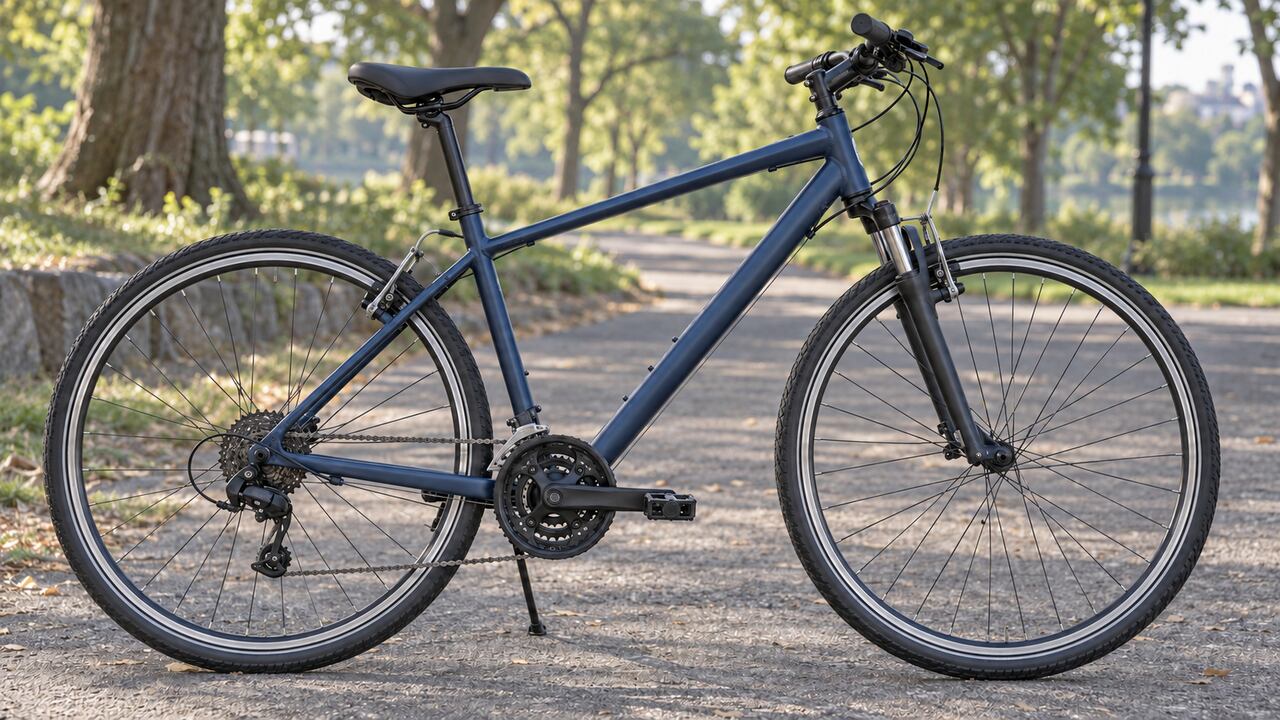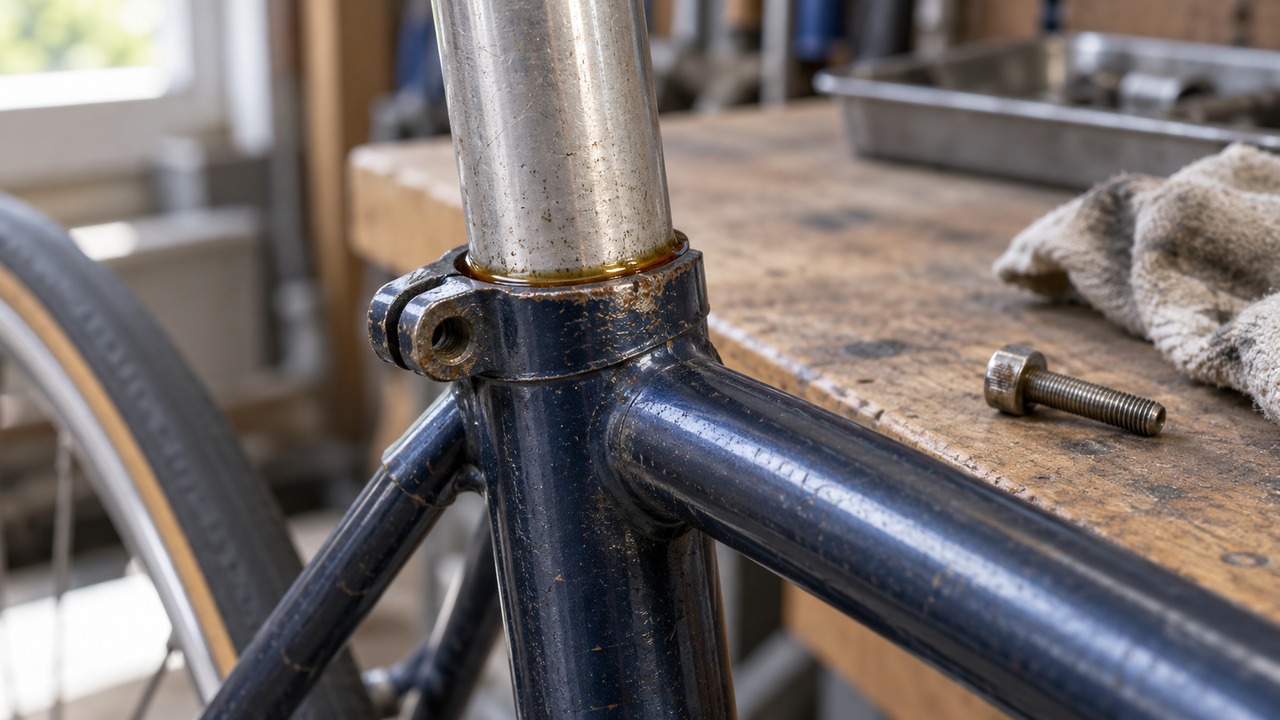
To lift bike handlebars on a contemporary threadless bike, transfer spacers from above the stem to under it, or flip an angled stem. Flipping a 100 mm, 6-degree stem from pointing all the way down to pointing up lifts the bars about 20 mm and prices nothing. On an older bike with a quill stem, loosen the bolt on prime of the stem, faucet it all the way down to free the wedge, and pull the stem up, however hold the minimum-insertion mark contained in the body. When these run out, a higher-rise stem, a riser bar or a steerer extender provides extra peak, every with its personal limits.
Begin by figuring out which stem you may have, as a result of the 2 methods elevate in several methods and have completely different security limits. The tables under give the rise in millimeters for every methodology, the bounds fork makers publish, and the torque values you’ll want once you tighten every thing again up.
Threadless or quill? Test this primary
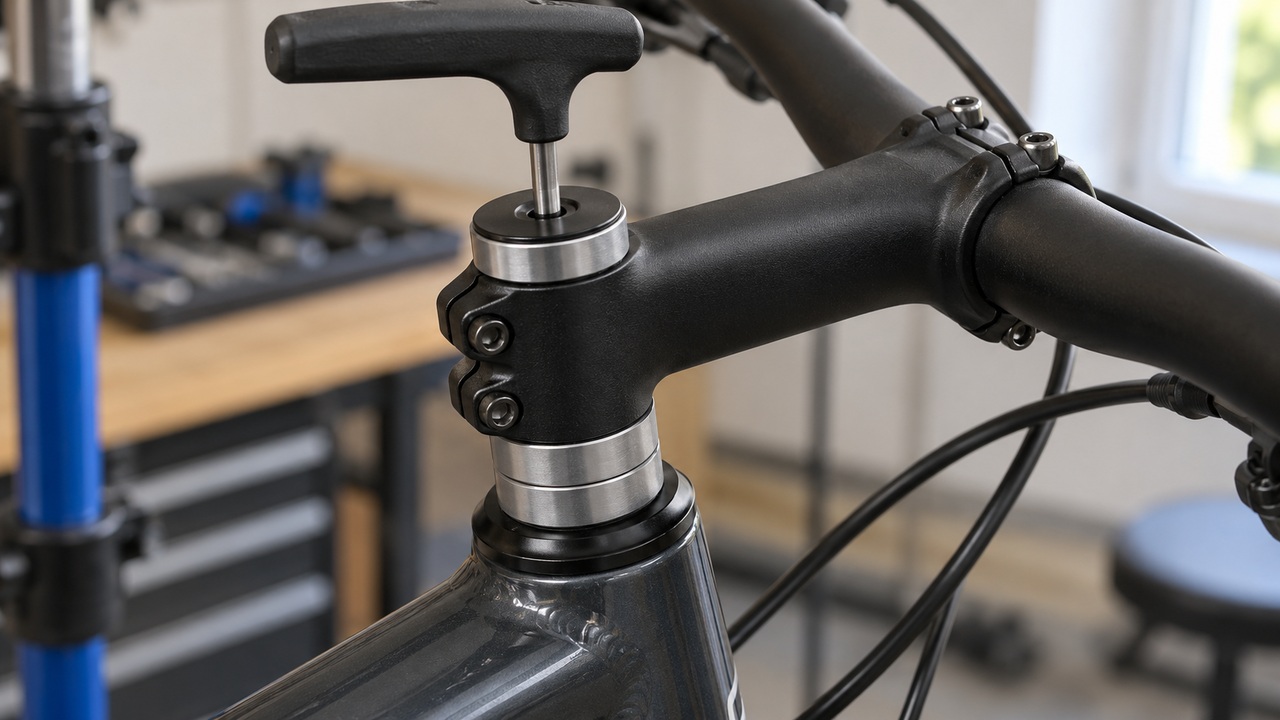
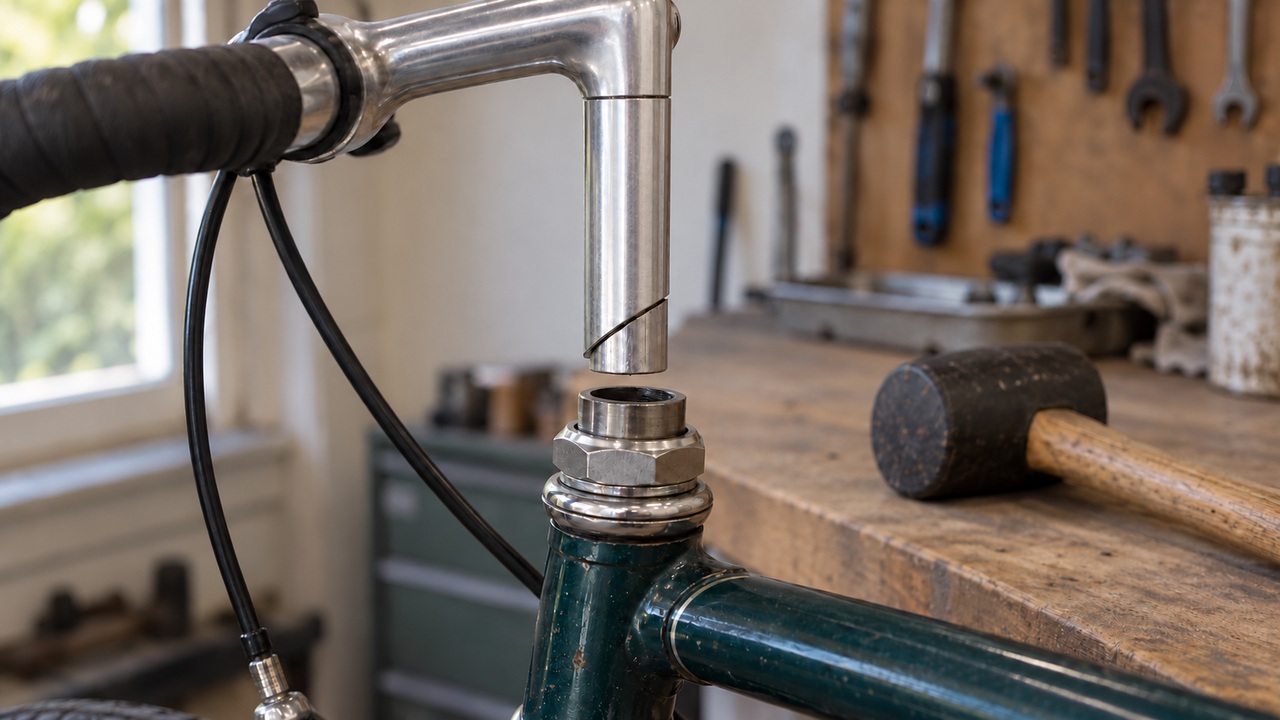
Take a look at the highest of the stem. A threadless stem clamps across the outdoors of the fork’s steerer tube with 1 to three pinch bolts, has spacer rings below it, and has a cap with a bolt on prime of the steerer. A quill stem slides down contained in the steerer, has one bolt in its prime, and sits on a big threaded locknut. Park Instrument notes that quill stems flip up on many older bikes and a few cheap bikes.
What you see
Threadless stem
Quill stem
Bolt on prime
A cap bolt on the highest of the steerer, with a spherical cap below it
One lengthy bolt within the prime of the stem physique that runs all the way down to a wedge or cone
Bolts on the facet
1 to three pinch bolts on the again of the stem that clamp the steerer
None on the steerer. The one facet bolts clamp the handlebar.
Under the stem
Spacer rings, then the headset’s prime cowl
A big hex locknut and a threaded race
The way it raises
Spacers, flipping, or a unique stem, bar or extender
Slides up contained in the steerer till it reaches the minimum-insertion mark
Widespread sizes (Park Instrument)
Steerers of 1, 1 1/8, 1 1/4 and 1 1/2 in
Quills of twenty-two.2, 25.4 and 28.6 mm
Many e-bikes and hybrids add a 3rd choice: an adjustable stem with a hinge and an angle bolt. If yours has one, loosen the angle bolt, tilt the stem up, and tighten the bolt to the worth printed on the stem. It’s the quickest change on the record.
Six methods to boost handlebars, with the rise in mm
The rise figures under are Icebike math for a body with a 73-degree head tube, a typical highway worth. Hybrids and mountain bikes run slacker. On a 69-degree head tube, the figures drop by 1 mm or much less for spacer strikes and flips as much as 10 levels. On a 65-degree mountain bike head tube, a 17-degree flip of a 100 mm stem comes out about 3 mm decrease than the desk. Work down the desk so as: the primary two price nothing.
Technique
Matches
Typical rise
Price
Essential restrict
Transfer spacers below the stem
Threadless, with spacers above the stem
About 4.8 mm per 5 mm spacer; 9.6 mm per 10 mm
Free
Solely the spacers already above the stem. The fork maker’s most stack nonetheless applies.
Flip the stem
Threadless stem with a 6 to 17 diploma angle, fitted pointing down
100 mm stem: 20 mm at 6 levels, 23 mm at 7, 56 mm at 17
Free
The bars additionally come again 6 to 17 mm. A 0-degree stem positive aspects nothing.
Larger-rise or adjustable stem
Threadless (adjustable variations exist for each methods)
100 mm at -6 levels to 100 mm at +17: about 37 mm. To 90 mm at +35: about 52 mm.
Value of a stem
Steep stems pull the bars again 15 to 43 mm, and might have longer cables.
Riser bar
Flat-bar bikes
Near the bar’s listed rise, which the maker prints in its specs
Value of a bar, plus grips
Drop-bar bikes would want flat-bar brake levers and shifters to modify.
Steerer extender
Threadless with an aluminum or metal steerer
Probably the most of any methodology; the maker lists the added peak
Value of the extender
Not on a carbon steerer (Icebike’s studying of fork limits). Wants sufficient naked steerer to clamp.
Elevate the quill stem
Quill stems
All the pieces above the minimum-insertion mark
Free
The mark should keep contained in the body. A caught quill wants releasing first.
How one can elevate handlebars by shifting spacers
If spacers sit above your stem, you’ll be able to transfer them under it. Every 10 mm spacer you progress lifts the bars 9.6 mm and strikes them 2.9 mm nearer to you on a 73-degree head tube, as a result of the steerer leans again. Skip this if the highest of the stem sits flush with the highest cap and no spacers trip above it: the steerer was minimize to size, and shifting spacers below the stem would depart the stem clamping on air.
Test the routing first. On many present highway and gravel bikes, brake hoses and shift cables run by the spacers and the headset cowl into the body. These spacers can’t slide off over the hoses. Transferring them takes cut up spacers made for that body, or disconnecting the brake hoses and bleeding the brakes afterward. Learn the body maker’s handbook on your mannequin; for many riders this can be a store job.
Strap or zip-tie the handlebar to the highest tube so the cables and hoses don’t kink when the stem comes off.
Loosen the stem’s pinch bolts about one full flip, as Park Instrument describes.
Maintain the fork, or tie it to the body if the bike is in a stand. Park Instrument warns that the highest cap is the one factor holding the fork in as soon as the pinch bolts are free.
Take away the highest cap bolt and cap, then slide the stem, with the bars nonetheless hooked up, off the steerer.
Transfer the spacers you need from the highest of the stack to under the stem, then slide the stem again on and put the remaining spacers on prime.
Test the hole. Park Instrument says the stem or prime spacer ought to sit about 3 mm above the highest of the steerer. In the event that they sit flush with or under it, the highest cap can’t regulate the headset.
Match the cap, cosy the bolt, set the headset, line up the bars, and torque the pinch bolts (see the guidelines).
The identical steps decrease the bars: transfer spacers from under the stem to above it. When you’ve ridden the brand new peak for a number of weeks and it fits you, a store can minimize the steerer to take away further spacers above the stem, inside your fork maker’s guidelines.
Discussion board threads on this query recommend loosening the highest cap and lifting the stem a number of millimeters with out including a spacer. Don’t. Park Instrument’s process requires each half to be absolutely seated with no gaps earlier than you regulate the headset. With a niche below the stem, the highest cap can’t press the headset collectively, so you’ll be able to’t regulate out bearing play.
Flip the stem: how a lot it raises the bars
Most threadless stems include an angle of 0 to twenty levels, per Park Instrument. A stem fitted pointing down (damaging) can flip over to level up (constructive). The bars rise by about twice the stem’s personal rise.
Icebike math. Rise = stem size x [sin(new angle) – sin(old angle)], with every angle measured from horizontal. On an actual bike, the angle from horizontal is the stem angle plus (90 minus the head-tube angle), as a result of the steerer leans again. For a flip, that simplifies to: rise = 2 x stem size x sin(stem angle) x sin(head-tube angle). A 100 mm, 6-degree stem on a 73-degree head tube: 2 x 100 x 0.1045 x 0.9563 = 20.0 mm. The identical flip pulls the bars again by 2 x 100 x 0.1045 x cos(73) = 6.1 mm.
Stem size
6 diploma flip
7 diploma flip
10 diploma flip
17 diploma flip
80 mm
16 mm up, 5 mm again
19 mm up, 6 mm again
27 mm up, 8 mm again
45 mm up, 14 mm again
90 mm
18 mm up, 6 mm again
21 mm up, 6 mm again
30 mm up, 9 mm again
50 mm up, 15 mm again
100 mm
20 mm up, 6 mm again
23 mm up, 7 mm again
33 mm up, 10 mm again
56 mm up, 17 mm again
110 mm
22 mm up, 7 mm again
26 mm up, 8 mm again
37 mm up, 11 mm again
62 mm up, 19 mm again
120 mm
24 mm up, 7 mm again
28 mm up, 9 mm again
40 mm up, 12 mm again
67 mm up, 21 mm again
Icebike math for a 73-degree head tube. Stem size runs from the middle of the steerer to the middle of the bar.
To flip it, strap the bars, take out the faceplate bolts, then loosen the pinch bolts and take away the highest cap as within the spacer steps. Flip the stem over, refit it, and put the bar again within the clamp. Park Instrument says to string the faceplate bolts in evenly so the hole above and under the bar matches, then tighten them in an X sample. Set bar roll and centering earlier than remaining torque; many bars have centering marks. Skip this in case your bike has a one-piece bar and stem, or hoses and cables routed by the stem or headset. These match a technique, and altering them typically means disconnecting the hoses and bleeding the brakes.
Match a higher-rise or adjustable stem
A brand new stem offers extra peak than a flip, however a steep one additionally pulls the bars towards you. Swapping a 100 mm, -6 diploma stem for a 100 mm, +17 diploma stem lifts the bars about 37 mm and shortens attain about 15 mm (Icebike math, 73-degree head tube). Going to a 90 mm, +35 diploma stem lifts them about 52 mm and shortens attain about 43 mm. These attain modifications alter how the bike steers and the way your again and shoulders load.
Before you purchase, match the steerer diameter and the bar clamp diameter. Park Instrument lists bar clamps of twenty-two.2, 25.4, 26.0, 31.8 and 35 mm, and a few differ by fractions of a millimeter, so measure with a caliper or learn the dimensions engraved on the previous stem. Park additionally notes that enormous modifications in stem size or angle might have longer cable housing.
Adjustable stems hinge on the entrance or again and lock with an angle bolt. Trek’s proprietor’s handbook says to tighten and torque the angle bolt once more everytime you loosen it. They go well with a rider nonetheless discovering a place. As soon as you understand the angle you want, a hard and fast stem weighs much less and has fewer bolts to verify.
Match a riser bar
On a flat-bar bike, a riser bar lifts the grips by near its listed rise with out touching the stem or headset. Swapping a flat bar for a 30 mm riser raises your fingers about 30 mm. Most riser bars additionally sweep again, which brings the grips nearer as properly. Select the width with our handlebar width calculator, and verify that the clamp diameter matches your stem.
Skip this in the event you trip drop bars. Transferring a highway bike to a riser bar means new brake levers and shifters made for flat bars, and that prices greater than a brand new stem.
Steerer extenders: essentially the most peak, essentially the most caveats
An extender is a brief tube that clamps onto the highest of your steerer and provides the stem a brand new, larger steerer to clamp. It provides extra peak than every other methodology right here. Before you purchase, verify two numbers within the maker’s directions: the added peak, and the minimal size of naked steerer the extender must clamp onto. In case your steerer was minimize brief, it could not have sufficient.
Icebike’s studying of the fork manuals: don’t match one to a carbon steerer. Not one of the carbon fork information Icebike learn mentions extenders, and Specialised’s information caps the spacer stack at 40 mm and requires its personal expander plug contained in the steerer, with a warning in opposition to star nuts. An extender places the stem larger than that 40 mm stack permits. On an alloy steerer, learn your fork handbook first: if it caps the spacer stack, as FOX (30 mm) and Specialised (40 mm) do, an extender works in opposition to that restrict. Test each cable and hose at full lock, as a result of a elevate that enormous can pull a brake hose tight.
How one can elevate a quill stem
A quill stem raises till its minimum-insertion mark reaches the highest of the headset locknut. The mark printed in your stem governs. U.S. federal guidelines (16 CFR 1512.6) require makers to put that mark at the very least 2.5 instances the stem’s diameter from the bottom level of the stem. So a stem retains at the very least 55.5 mm contained in the body for a 22.2 mm quill, at the very least 63.5 mm for 25.4 mm, and at the very least 71.5 mm for 28.6 mm (Icebike math from the federal rule). Use these flooring solely when the mark has worn off, and deal with them as minimums, not targets. Some stems additionally carry a maximum-height mark. Park Instrument’s rule covers each: don’t go above the utmost peak or previous the minimum-insertion mark.
{Photograph} the bar angle and be aware the place the bars level, so you’ll be able to match them later.
Loosen the bolt on prime of the stem about two turns, as Park Instrument directs.
The wedge or cone inside tends to remain locked. Faucet the bolt head down with a mallet (Park makes use of a mallet and punch) till the stem turns freely.
Pull the stem as much as the peak you need. For those who see the minimum-insertion mark above the locknut, push it again down till the mark disappears.
Line the bars up with the entrance wheel. A ruler held in opposition to the fork legs helps.
Tighten the highest bolt to the worth printed on the stem. Park Instrument lists 16-18 Nm as a generic vary for quill bolts and 19.6-29.4 Nm for Shimano.
If the stem hasn’t moved in years, take it out, clear it, and grease the quill, the wedge, the bolt and the within of the steerer earlier than you refit it. Park Instrument and Trek’s handbook each name for that grease on quill stems. If the stem nonetheless gained’t budge after you free the wedge, cease: a seized aluminum quill in a metal steerer wants greater than a mallet, and Park Instrument covers that job in its seized seatpost and stem information (listed within the sources). Skip the elevate if the mark already sits on the locknut. A taller quill stem or a quill-to-threadless adapter with the next stem is the subsequent step.
Spacer and insertion limits by maker
The fork maker units the spacer restrict, not the stem maker or the store. These are the printed figures Icebike discovered. The place makers disagree, comply with the handbook on your fork.
Supply
Fork or stem
Spacers below the stem
Spacers above the stem
Steerer prime
Specialised
Specialised carbon forks
Most 40 mm (1.5 in)
Don’t depart them there completely
Mark it degree with the highest of the stem, then minimize 3 mm decrease (2 mm on alloy) to suit the plug
Trek
All stems on Trek bikes
At the very least one 5 mm spacer; most within the fork handbook
One spacer above and one under on carbon steerers
Not said on the stems web page
FOX
FOX suspension forks
Most 30 mm
Not said
Don’t minimize greater than 3 mm under the highest half
Park Instrument
Normal threadless follow
Not said
Required on prime of the stem on carbon steerers
About 3 mm under the highest of the stem or prime spacer; on carbon, the steerer runs throughout the stem
16 CFR 1512.6
Quill stems bought within the U.S.
n/a
n/a
Insertion mark at the very least 2.5 x stem diameter from the bottom level of the stem
Different manufacturers
Canyon, Large, Cannondale, RockShox and others
Icebike didn’t discover a printed determine on a public spec web page. Learn the fork’s personal handbook earlier than you add stack.
Be aware the battle on carbon: Park Instrument and Trek each name for a spacer on prime of the stem. Specialised says to not depart spacers above the stem completely, as a result of they defeat its expander plug’s help of the steerer and stem. Use the rule for the fork you personal.
Torque values for stem bolts
Use the quantity printed in your stem. Trek’s handbook says makers print it there, and that determine beats any chart. When the stem offers none, these are the printed figures.
Bolt
Revealed worth
Supply
Threadless pinch bolts (steerer clamp)
Typical 4-6 Nm. Thomson 5.4 Nm, Race Face 6.2 Nm, Deda 8 Nm, FSA carbon 8.8 Nm.
Park Instrument
Stem torque on a Specialised carbon steerer
Not more than 9.0 Nm, raised in 0.56 Nm steps in an alternating sample
Specialised
Faceplate bolts (bar clamp)
Typical 4-6 Nm. Thomson 5.4 Nm, Time 6 Nm, Race Face 6.2 Nm, Deda magnesium 8 Nm.
Park Instrument
Quill stem prime bolt (wedge)
Generic 16-18 Nm; Shimano 19.6-29.4 Nm
Park Instrument
High cap bolt
No torque determine. Comfortable it till the bearing play is gone and the bars nonetheless flip freely.
Park Instrument
For different cockpit bolts, the bike torque spec finder offers typical ranges by half and materials. Don’t put grease or carbon paste between the stem and a carbon steerer: Trek and Specialised each warn in opposition to it.
Test the rise before you purchase a stem
Enter your present stem and the one you’re contemplating. Set the pinnacle tube angle field to your body’s determine from the maker’s geometry chart (it begins at 73 levels). Enter stem angles as printed on the stem: constructive when it factors up, damaging when it factors down. A 100 mm stem flipped from -6 to +6 on a 73-degree head tube reveals +20.0 mm of bar peak and -6.1 mm of attain, the identical because the flip desk. The spacer field strikes the stem alongside the steerer, so 20 mm of spacers reveals +19.1 mm of peak and -5.8 mm of attain.
For those who’re evaluating entire setups, the bike match comparability instrument provides body stack and attain to the stem and spacers. The identical stem calculator additionally lives on our stem size calculator web page.
Security guidelines after any handlebar peak change
Headset preload. Earlier than you tighten the pinch bolts, cosy the highest cap till you are feeling slight resistance and the bars nonetheless flip freely. Park Instrument backs it off 1/8 flip if steering feels sticky.
Play verify. Comfortable the pinch bolts, maintain the entrance brake, and rock the bike. A knock on the prime of the pinnacle tube means play: loosen the pinch bolts, add 1/8 flip to the highest cap, and verify once more.
Steerer and spacers. The steerer sits about 3 mm under the highest of the stem or prime spacer, and on carbon it runs by the total peak of the stem clamp.
Quill mark. The minimum-insertion mark is out of sight contained in the body.
Bolt torque. Pinch bolts and faceplate bolts on the worth printed on the stem, in an alternating or X sample.
Bars straight. The bar sits sq. to the entrance wheel and centered within the clamp.
Cable and hose size. Flip the bars to full lock each methods. No brake cable, hydraulic hose, shift housing or e-bike show cable pulls tight, kinks or strikes the brake lever. A brief hydraulic hose means an extended hose and a brake bleed.
Brakes. Squeeze each levers. They really feel the identical as earlier than you began.
Check trip. Journey slowly in a quiet place, then recheck bolt torque after the primary trip.
How excessive ought to your handlebars be?
Icebike’s place to begin, not a match rule: for commuting, touring and relaxed using, set the highest of the bar degree with the highest of the saddle or just a little above it. For quick highway using, begin decrease than the saddle and lift the bar in case your neck, fingers or decrease again complain. Measure each heights from the ground with the bike degree. Elevate in steps of 10 to twenty mm and trip per week between modifications.
Icebike’s rule of thumb: in the event you nonetheless want greater than 40 mm after the spacers and a flip, the body could also be too small or too lengthy for you. Our body measurement information and the stack and attain comparability instrument present whether or not a unique body would match higher than a taller cockpit.
Handlebar peak questions
Are you able to elevate handlebars with out a new stem?
Sure, in case you have spacers above the stem, an angled stem pointing down, an adjustable stem, or a quill stem set under its mark. These 4 price nothing. If the stem sits on the prime of the steerer and already factors up, you want new components.
Does flipping the stem elevate the handlebars?
Sure, when the stem has an angle and also you match it pointing down now. A 100 mm, 6-degree stem positive aspects about 20 mm. A 0-degree stem stays on the similar peak whichever means up it goes.
How excessive can handlebars go?
Your fork units the sensible restrict by its steerer size and spacer cap. For brand new bikes bought within the U.S., 16 CFR 1512.6 additionally limits the bar ends to 406 mm (16 in) above the seat with the seat at its lowest and the bars at their highest.
When ought to a store do it?
Instrument hyperlinks on this web page go to Amazon, and Icebike earns a fee on purchases by them. We linked Park Instrument variations of instruments this information requires, not picks from a hands-on check.
Take it in if the steerer is carbon and also you’re uncertain of the bounds, if a quill stem gained’t transfer after you free the wedge, if a hydraulic hose comes up brief, or in the event you don’t personal a torque wrench that reads 4-6 Nm.
Sources
Park Instrument. Stem Removing & Set up: Threadless (January 30, 2019, up to date June 6, 2023; accessed October 15, 2026). Pinch and faceplate bolts, 3 mm steerer hole, carbon steerer by the stem with a spacer on prime, headset adjustment order, typical 4-6 Nm, stem angles 0-20 levels, housing size.
Park Instrument. Stem Removing & Set up: Quill Stems (January 30, 2019; accessed October 15, 2026). Wedge or cone, quill diameters, minimum-insertion and maximum-height marks, mallet and punch, grease factors.
Park Instrument. Torque Specs and Ideas (accessed October 15, 2026). Stem binder, steerer clamp and faceplate torque by model.
Park Instrument. How one can Regulate a Threadless Headset (accessed October 15, 2026).
Park Instrument. Seized Seatposts and Stems (accessed October 15, 2026).
Specialised. Instruction Information: Specialised Carbon Forks (IG0298 R6, accessed October 15, 2026). 40 mm spacer restrict, spacers above the stem, carbon plug, 9.0 Nm most stem torque on the steerer, no carbon paste.
Trek. Proprietor’s Guide: Stems (accessed October 15, 2026). 5 mm spacer under, spacers above and under on carbon, torque printed on the stem, quill insertion line, angle bolt, no grease on the stem-steerer joint.
FOX. Fork: Normal Data and Set up Information (accessed October 15, 2026). 30 mm spacer restrict, 3 mm steerer minimize rule.
U.S. Code of Federal Rules. 16 CFR 1512.6, Necessities for steering system (accessed October 15, 2026). Quill insertion mark at 2.5 x stem diameter, 406 mm bar-end peak restrict.