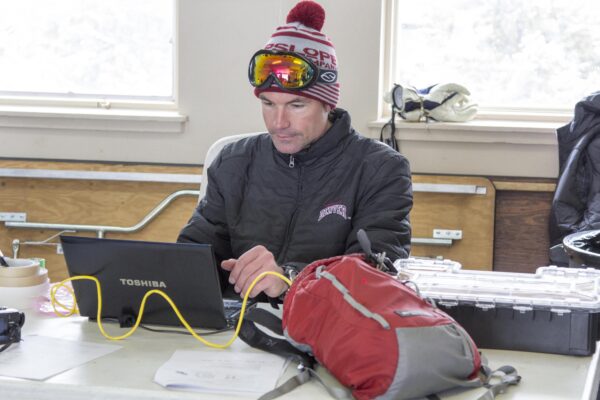
Michael Decker, PhD, engineer, the thoughts behind Opedix
Drained legs can finish a ski day earlier than the lifts shut. For Michael Decker, that acquainted drawback turned half of a bigger problem: Might clothes present helpful help by way of hours of motion—and stay snug sufficient that folks would need to put on it?
That search helped produce Opedix, the directional compression ski base layers now out there by way of SYNC Efficiency.
However the journey started with an concept Decker doubted would work.
Whereas conducting biomechanics analysis in Vail, Colorado, he and colleague Mike Torry encountered an elaborate knee-support idea. Its straps tightened because the leg rotated. To Decker, it seemed cumbersome and unpromising.
Then they measured it.
The outcomes challenged their assumptions. Over a beer afterward, the researchers saved discussing what they’d seen. Might they construct helpful help into one thing easier?
“Properly, what if one thing like that was constructed right into a pair of soccer pants?” Decker recalled asking.
An unlikely query had opened a path towards one thing skiers may put on beneath their on a regular basis gear.
The Thought Behind Opedix Ski Base Layers
Decker and Torry labored on the group then often known as the Steadman-Hawkins Sports activities Medication Basis. Decker affectionately describes their position as “the measurement geeks.”
They studied motion and evaluated concepts, together with ideas folks introduced in hoping to enhance joint help.
Decker initially approached help largely as a mechanical drawback. Typical braces used hinges and inflexible shells. Compression sleeves squeezed the world round a joint.
The strap-based idea urged one other risk value exploring.
By about 2001, Decker recollects, they had been sketching designs. Then Kim Gustafson helped give the work a sensible focus.
Based on Decker, Gustafson had undergone a number of ACL surgical procedures. He needed help he may comfortably put on all through the day, even when it supplied much less help than a considerable knee brace.
That request helped outline the problem. A design’s worth depended partly on whether or not somebody would constantly put on it.
Consolation turned a part of the engineering.
Click on on photographs to enlarge
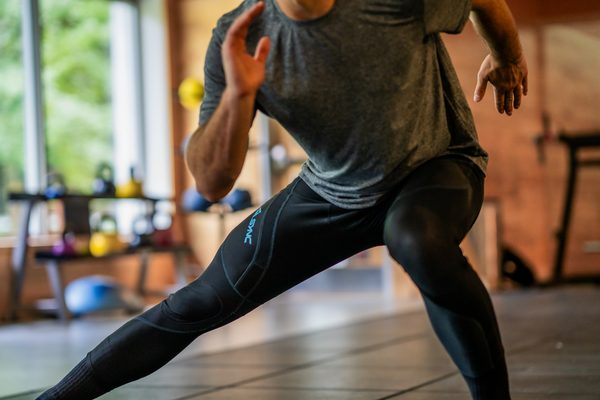
Why the Hips Matter to the Knees
As Decker continued his training, he turned more and more excited about how muscle tissues and the nervous system work collectively to regulate motion.
That expanded his considering past the knee.
He describes the decrease physique as a linked system. Motion on the ankle impacts what occurs farther up the leg. Muscle mass across the hip assist management the pelvis and thigh.
A garment meant to help motion across the knee due to this fact wanted to think about the hip, too.
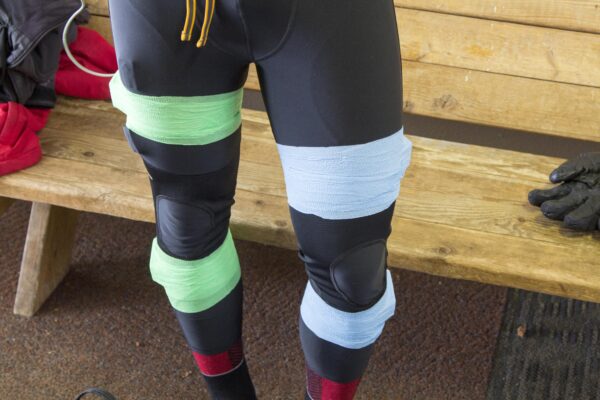
The ensuing design combines materials with completely different resistance to stretch. Assist bands join areas across the hips, legs and knees, offering resistance in chosen instructions.
That is the excellence behind directional compression. The design seeks to affect how the physique strikes, going past the squeeze of a traditional compression garment.
“The important thing to me on this entire design was to not maintain one thing in place, however to provide the neuromuscular system some boundaries of how the knee features,” Decker mentioned.
His aim was to work with the physique’s personal motion management whereas permitting the wearer to stay energetic.
Taking the Questions Onto Snow
Snowboarding provided a testing floor near dwelling—and individuals who may consider a garment by way of lengthy days of motion.
Decker recollects starting with about 20 ski instructors, asking about discomfort and fatigue. The work expanded into bigger research and testing with collegiate racers.
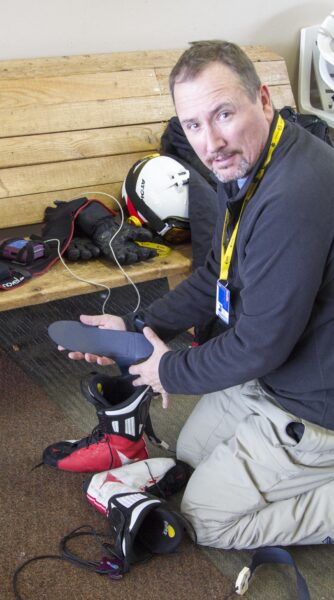
On the College of Denver, coach Andy LeRoy helped set up on-snow analysis. Researchers used body-mounted sensors and pressure-measuring insoles to analyze what modified when athletes wore the tights.
Decker remembers Alex Leever among the many early members. Right now, Leever leads SYNC Efficiency, connecting the product’s testing historical past with the corporate promoting it.
For Decker, the attraction went past listening to whether or not somebody preferred the garment. He needed to grasp what occurred throughout a flip.
That meant taking the measurements onto snow, finding out the outcomes and returning with new questions.
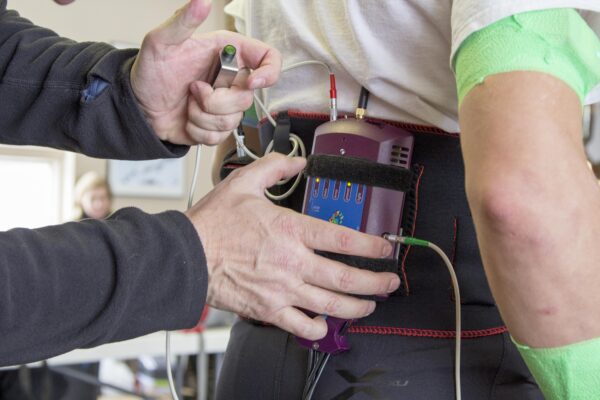
What Researchers Discovered Throughout Ski Turns
A examine revealed in Science and Snowboarding VII helps clarify what the researchers noticed.
Six collegiate racers—three males and three ladies—skied a standardized slalom course sporting both Opedix directional compression tights or customary compression tights.
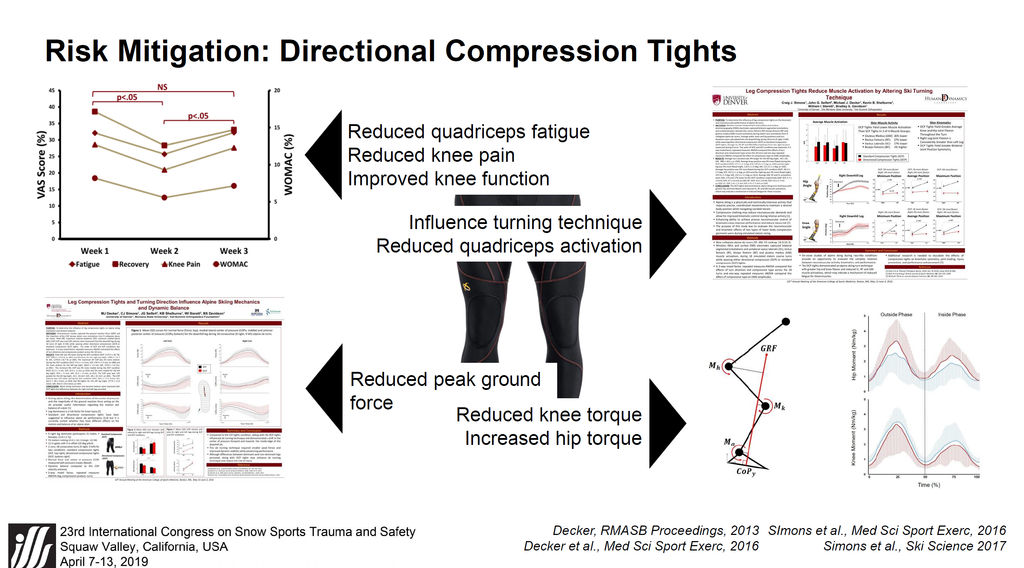
With Opedix, the researchers measured adjustments in posture, diminished knee loading and decrease activation in two quadriceps muscle tissues. Their evaluation confirmed a redistribution of the muscular calls for of turning, with the hips contributing a higher share and the knees a smaller share.
Common snowboarding pace didn’t differ considerably between the 2 circumstances.
For readers, the sensible level is easy: The garment modified how these skiers distributed effort by way of their legs.
That small examine examined motion and loading. Its findings helped clarify why the design might be value investigating for fatigue and damage mitigation.
A Bigger Research of Ski Teacher Accidents
The analysis additionally moved past particular person turns to look at what occurred throughout ski seasons.
A two-season investigation led by College of Denver researchers concerned 341 skilled instructors at three Rocky Mountain ski areas. Researchers confirmed study-group membership for 266 members based mostly on tools use and accomplished surveys.
The examine in contrast Opedix tights, a specialised binding, a mixture of the 2 and a management situation utilizing neither intervention.
The report’s adjusted evaluation discovered a 77.8% decrease general damage threat within the Opedix-only situation in contrast with the management situation. That evaluation accounted for whether or not instructors had been utilizing their assigned tools when injured and whether or not the incident occurred throughout their on-mountain work.
The researchers additionally reported fewer knee accidents with the tights.
These findings concern the instructors and clothes studied; they don’t imply a base layer eliminates damage threat. They do, nonetheless, give the Opedix story one thing extra substantial than an inventor’s enthusiasm: documented discipline analysis into its potential advantages.
Why Fatigue Issues Past Racing
For a lot of skiers, probably the most relatable query stays: What would possibly this add to my day?
Decker factors to fatigue analysis by John Seifert at Montana State College, describing work that mixed muscle-activity measurements with monitoring how a lot members skied. Based on Decker, the findings supported experiences of diminished fatigue whereas sporting the tights.
His curiosity extends nicely past racers.
Coaches spend hours engaged on snow. Mother and father attempt to hold tempo with their kids. Leisure skiers need to benefit from the days they’ve put aside for a mountain journey.
“If you wish to ski stronger and longer, it’s a very good concept to put on these to help you by way of fatigue,” Decker mentioned.
For these skiers, the attraction is sensible: help across the hips and knees in a garment designed to suit beneath their ski clothes.
Decker says the design grew from finding out how the physique features, which additionally explains its attraction for actions similar to mountaineering and working.
Snowboarding was the yard the place they might put their inquiries to work.
Match Issues Extra Than Most Tightness
Decker’s strategy to suit follows the considering that guided improvement: Extra squeeze doesn’t routinely imply extra helpful help.
He emphasizes the garment’s place across the hips and knees, together with a size that matches the wearer’s proportions.
The match ought to really feel comfortable across the knee with out counting on extreme constriction.
“It doesn’t must be so constrictive for them to work,” he mentioned.
For consumers, that makes cautious sizing a part of the acquisition. The help zones want to sit down the place the design intends, and the garment ought to stay snug by way of the exercise.
In any case, willingness to put on it was central to the thought from the start.
The place to Purchase Opedix Ski Base Layers
SYNC Efficiency sells males’s and ladies’s Opedix Directional Compression Base Layers. Skiers can study extra in regards to the design and store each variations by way of SYNC’s Opedix expertise web page.
Decker not participates in product improvement, however discussing the journey nonetheless brings out his enthusiasm. He remembers the collaborators, the testing and the satisfaction of discovering one thing value pursuing in an concept he initially doubted.
For skiers deciding what belongs of their tools package, Opedix gives a motive to think about the layer closest to their physique. Its design grew from a sensible ambition: make help snug sufficient to put on by way of the actions folks love.
What started as a query over a beer turned a product constructed round that aim.
Disclosure: SYNC Efficiency and Ski Racing Media share an proprietor.